The one that went further
Azure Route in Eindhoven, 14/06 - 17/06
Hoi-hoi from our third dutch stop in Eindhoven!
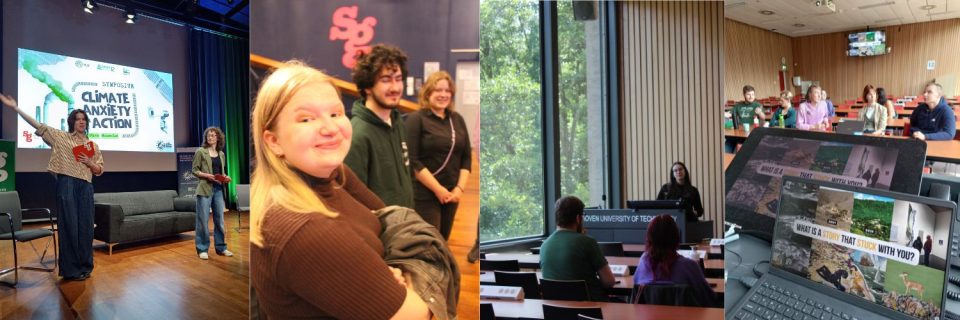
We knew early on that Eindhoven had a treat for us. Inspired by this year’s Europe on Track theme, AEGEE-Eindhoven organised an entire symposium dedicated to climate anxiety discussions. The event really brought the topic to a wider array of people that we usually reach with our workshops. How cool and what an honour!
The symposium opened with a panel discussion featuring three speakers approaching climate anxiety from different angles: researcher Lena Hölzle, who studies eco-distress and environmental emotions at the University of Groningen; Mewis Breij from Youth Climate Movement, who focuses on climate education and engagement; and Judith Lammers, Eindhoven’s Climate Mayor and local politician advocating for sustainability.
There were some conversations that dominated the panel and that stuck with us the most: A recurring theme throughout the discussion was the feeling of being overwhelmed by the scale of the climate crisis. Many participants expressed feeling small and powerless, questioning whether individual actions can really make a difference and how to connect people to act towards the cause. So how can people connect with each other to create meaningful change and help others see climate change as a shared global issue?
Mewis encouraged others to understand to help others understand the bigger scale. Some people tend to view it as isolated cases and should rather look at the bigger picture and understand this is one huge issue. Understanding the interconnected nature of the climate crisis can help people grasp both the severity of the situation, importance of collective action and be the necessary push that leads them to take action.
“Every small action is an act of resistance against a capitalist system. Love and embrace that” said Judith, describing everyday climate-friendly choices like taking a cold shower as ways to challenge environmentally harmful capitalist structures. She also emphasized the importance of maintaining our commitment and making our opposition visible week after week, for example by regularly attending and speaking at local council meetings.
A strong message from the panel was the importance of finding your allies. Whether through apps, conversations, or simply exchanging contact details, they encouraged participants to actively build networks around them. The underlying idea was simple: we need to connect, organise, and unite.
Since many participants were young people thinking about their future careers, a question emerged: is it justifiable to work for companies and corporations that significantly harm the environment in hopes of creating change from within?
Judith argued that all strategies are needed and that working inside such companies can be valuable if approached with a clear goal. Mewis was more sceptical, emphasising solidarity and questioning whether, in the end, such work serves the wrong interests. The discussion echoed many of the conversations we had with locals throughout our route, highlighting the dilemmas young people face between economic and job security, a sense of purpose, and concerns about the future they will inherit.
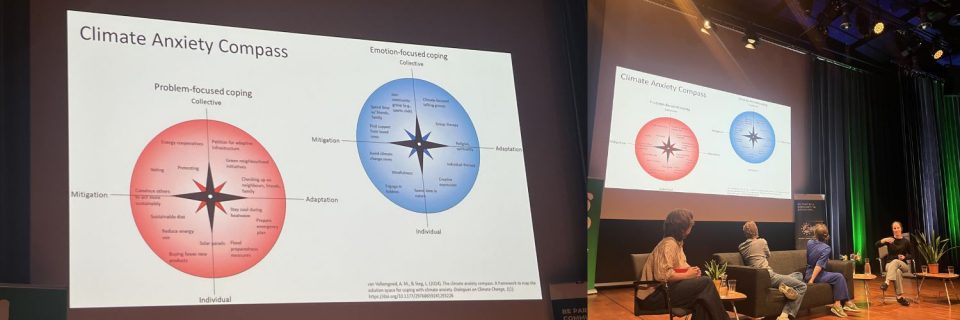
Panelist and researcher Lena Hölzle did a short presentation of her findings about eco-anxiety. She suggests that climate anxiety is a rational response to the real threat of climate change and is often triggered by exposure to climate-related news. She found that people can experience both general climate anxiety and anxiety about specific climate impacts, such as floods, although these forms are closely connected. It was fascinating to hear from someone that actually researches eco-anxiety. She talked about the climate anxiety compass, a framework for ways of coping with the climate anxiety. It also distinguishes between problem-focused coping, which aims to address climate change directly, and emotion-focused coping, which helps people manage the feelings climate change can evoke.
Problem-focused coping includes actions such as reducing energy use, adopting a sustainable diet, voting, protesting, joining energy cooperatives, or supporting local environmental initiatives. Emotion-focused coping, on the other hand, focuses on maintaining well-being through activities such as spending time with friends and family, joining community groups, engaging in hobbies, spending time in nature, mindfulness, creative expression, or seeking support through therapy. How suitable and what a useful source!
A question was raised to her about eco-emotions: if anger can motivate action, can positive emotions such as joy also act as drivers and make engagement more enjoyable? An example from the moderator included ice protests and dinosaur costumes, showing how creativity and playfulness can also be used in climate activism. A nice positive note amongst the anger and doom a lot of people expressed.
After the very insightful and rich discussion- so much so that we didn’t have to pitch in – we gave our Storytelling workshop. Although the participant group was surprisingly smaller considering the size of the symposium, those who joined were highly engaged. The importance of emotion and visualisation in storytelling was highlighted throughout. During the workshop, we also had a reunion with Ninke, a project team member who participated in the session and contributed valuable insights.
Our workshop was followed by a workshop called “Navigating Climate Choices” organised by the Go Green Office at TU/e, an organisation that supports sustainability initiatives and helps students and staff make more environmentally conscious choices both on and off campus. For once, we got to participate as attendees rather than facilitators, which gave us a chance to reflect on our own climate dilemmas and learn from the perspectives of others. The participants once more got quite into the conversations so the end conversations were hurried a bit.
After that, we had the chance to explore the campus and visit the Hubble Community Café. The day ended with an early night, as the symposium organisers needed some well-deserved rest, and we also had an early start ahead of us: another workshop at a local high school awaited us the next morning.
The workshop this time was How to Talk About Climate Without Preaching. After discussing it as a team, we concluded that it could have been much worse. At least we weren’t facilitating “Climate Emotions 101” – asking teenagers to openly discuss their feelings in front of their classmates and a group of complete strangers sounds like a challenge on a whole different level. In comparison, talking about climate communication suddenly felt like the easier option.
We were also pleasantly surprised by the group’s openness and willingness to share, especially compared to our experience in a high school in Budapest. We could already start noticing different personalities and group dynamics emerging.
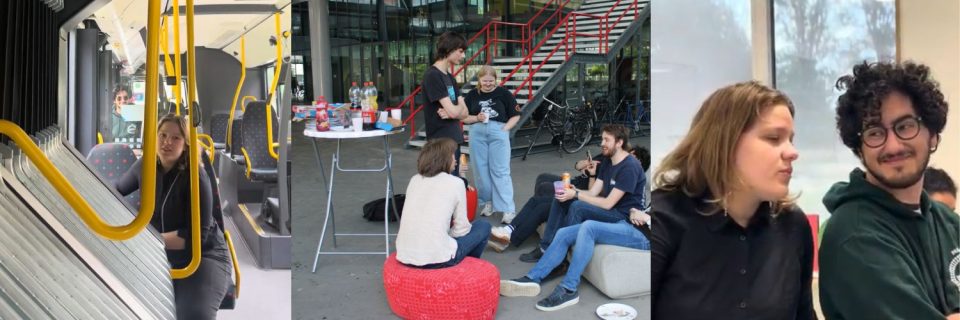
Their teacher also gave us some city recommendations, one of which very quickly followed by going to The Happiness Cafe. After the teenagers, some alone time was needed so we decided to split up to enjoy the city and our own company. I decided to go to the cinema. Sounds like a weird choice while being a tourist but once again some normalcy sounded good. They have a cool small alternative cinema called Lab-1. In the meantime Alina went to a contemporary art museum Van abbermuseum and Phaedon decided to take in the city by walking a bit.
Looking back, Eindhoven felt like a moment of deeper reflection within our route, where conversations around climate anxiety and communication came together, bringing us into dialogue with experts and others closely engaged with the topic. It was a nice reminder that these discussions are always evolving, shaped by the people in the room and the contexts they emerge from, and that there is value in every different way of engaging with the climate crisis.
Written by: Kadi Värnik
(and the Azure team)