As we have just passed the halfway point of our route, there’s no better time to look back to more than a dozen interviews collected so far and connect the dots across 5 countries, with interviewees representing 11 cities! Even though I have found people to be quite reserved and not especially interested in talking, particularly in front of the camera, they always have a sense of the topic, and ideas of what they would like to improve in their lives and communities. The interviews form the backbone of this story. The details come from the cultural context, kindly provided by the locals of each place, the ones hosting us or we meet at our workshops and the ones we have met randomly in shops and cafes.
As a first, general observation, every single person I have interviewed, or even just chatted with, thinks they are a typical representation of people in their community. Even individuals from the same community (AEGEE Delft members as one example) with diametrically opposing views, are confident in their ordinariness. Many have attributed their lack of eco anxiety to having no power and so, why worry to begin with? Others attribute their eco anxiety to precisely that same feeling of powerlessness. But as diverse as our cast of interviewees has been, so have their thoughts, opinions and emotions.
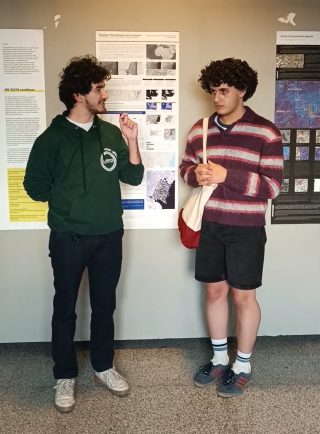
Nevertheless, there have been several motifs that kept being repeated in different contexts and across different issues. All interviewees agreed that climate change is a worrying phenomenon worth acting on, and showed empathy towards those experiencing eco anxiety. They have all agreed that climate action should be a collective responsibility that goes beyond the abilities of the individual, while expecting nationally and internationally coordinated action. “Changing my consumption has basically no impact on the global phenomena we are seeing” one went as far as saying, when asked why they have not modified their behaviour to be more climate friendly, before adding, “If the EU or the UN actually enforced some changes, I would follow them”.
When it comes to eco anxiety as such, people that experience it are, understandably, more eager to talk. What is interesting, however, is how when I ask about the meaning of eco anxiety and the emotions and behaviours surrounding it, interviewees are quick to respond with the climate problems in their geographical area. From traffic and air pollution to lack of green and poor public transport, to name a few, for many eco anxiety seems to be completely synonymous and interchangeable with climate change. To drive the point home, the most common emotion is powerlessness, closely followed by anger and fear. Hope comes dead last.
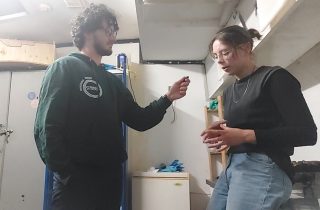
In one instance, when asked whether they are experiencing eco anxiety, an interviewee responded with “no, because I drive a petrol car”. Multiple people have also (informally) cited liking meat too much as an explanation for their lack of eco anxiety. The most common explanation for not having eco anxiety, by a large margin, is that it is simply not part of their every-day reality and therefore, not something they think about often. In all cases, the same interviewees went on to describe concern over the climate, and independently shared pro-climate actions they are taking in their daily lives, such as recycling, taking public transport, or limiting their waste.
For almost everyone, eco anxiety can be a good thing in moderation, insofar it helps mobilise action, but can be a negative if it is paralysing. Others could not even see the point of having eco anxiety in the first place, as there is little difference an individual can make in the grand scheme of things, however they too would comply with centralised, institutional changes like green transport.
Now on to the differences! Among those that have reported climate anxiety, there is a very clear North – South divide. In Turkey, the Balkans, and even Hungary, climate change felt personal and so did eco anxiety. In Ankara in particular, workshop participants readily shared stories of how climate change has affected themselves and their loved ones. When asked what message they would like to convey through this interview, one person urged his neighbours and fellow townfolk to protect their agriculture and seas, as a key necessity for economic growth. Climate change was directly threatening their prosperity and their anxiety reflected that.
On the flip side, with Dutch interviewees, it felt all more philosophical. They all spoke empathetically about the planet, animal and human suffering, but some described their worry as something directed to far and distant lands. Home, in fact, felt safe, despite it being a prime target for land reclamation (by the ocean). As a theoretical prospect, they find this worrisome. In practice, however, everyone I asked pointed to the proactive approach the Netherlands has adopted towards water management and disaster prevention. The same sentiment was echoed by foreigners residing in the Netherlands, citing proactivity as what they would like their home countries to adopt.

The barrier to being more proactive as an individual has also been significantly varied, with no apparent geographical or gender patterns. When asked which of their behaviours they would like to change, responses ranged from using the public transport more (in Ankara, where public transport is notoriously inconvenient), to eating less meat, buying fewer products with plastic packaging, using AI less, traveling more by train instead of plane, and getting organised within their community. When asked why they have not implemented this change already, the most common answer has been cost. Indeed, to use someone’s exact words,
“doing the bad thing (i.e. the wasteful / polluting thing) is easy (i.e. cheap), doing the good thing is very very very very very hard”.
Other common reasons are not knowing where to start or how to get connected with those already doing whatever it is this person wants to do, or simply not feeling the urgency to do so.
To close with a hopeful note, all participants agreed that building communities and organising action is the strongest antidote to both eco anxiety and climate change! City after city, message after message was to find the people that care, get organised, and do something, anything at all. Some talked about planting trees with mates, volunteering or activism. There were some that had already found out even created their communities. For those, climate change was a huge concern and they were the ones that were most knowledgeable about eco anxiety. Interestingly, however, these individuals reported feeling hopeful and content with what they are already doing. So indeed, during our interview with Ismir Smajić, an expert in biodiversity and sustainable development from Sarajevo, gave us advice that seemed to translate across the continent:
“The most important thing young people can do to combat eco-anxiety is to get involved, do projects, gain knowledge and build their communities. Learn from eachother, create networks and collaborate on creating solutions.”
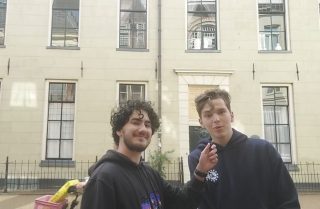
As a final message to decision-makers, whenever I asked someone what they would like to see in their city or country, the answer was always that they wish that their local governments would support and encourage grassroots initiatives with funds and resources. So, no need to reinvent the wheel, just find the people that are already doing cool things locally. And to close with a message sent by Elif from Ankara:
“I know sometimes it’s really hard to take the responsibility to do your part, but this is our world and we should care more, we should do as much as we can do.”
Written by: Phaedon Angelopoulos
a member of the Azure Team of Europe on Track 12